> For the complete documentation index, see [llms.txt](https://docs.cremawork.com/llms.txt). Markdown versions of documentation pages are available by appending `.md` to page URLs; this page is available as [Markdown](https://docs.cremawork.com/v-4/overview/folder-structure.md).
# Folder Structure
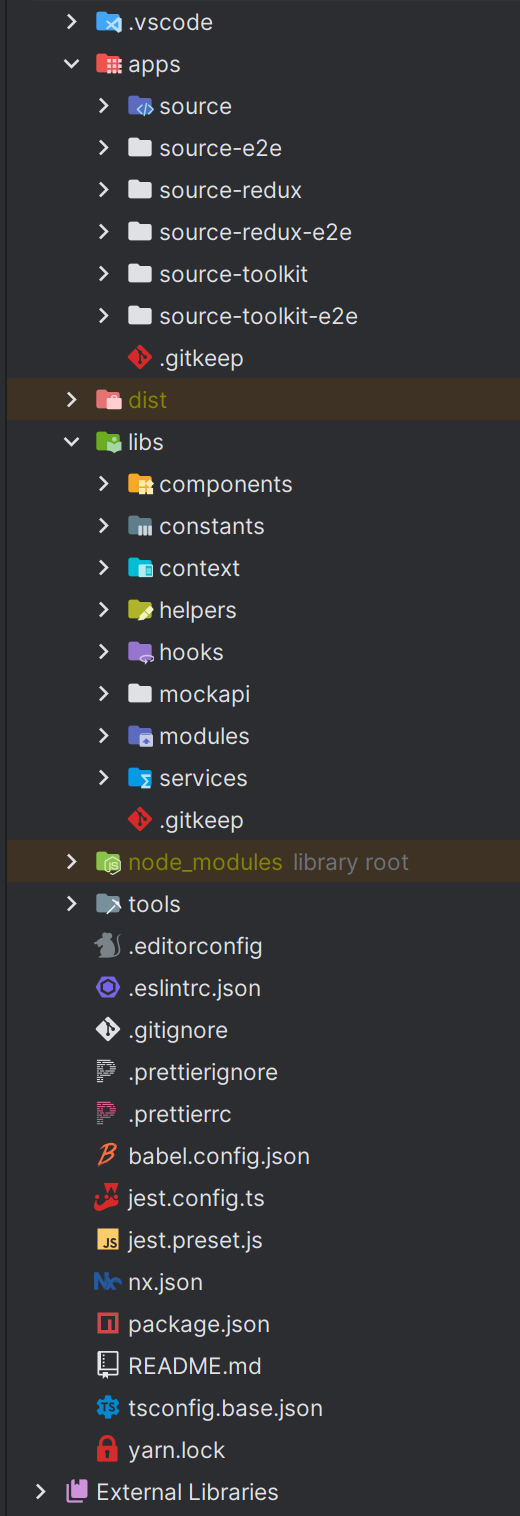
Crema has a vast and professional folder structure
The folder structure is professional and easy to understand. A typical Nx workspace is structured into "apps" and "libs". This distinction allows us to have a more modular architecture by following a separation of concerns methodology, incentivizing the organization of our source code and logic into smaller, more focused, highly cohesive units.\
\
Nx automatically creates TypeScript path mappings in the `tsconfig.base.json` file, such that other apps or libs can easily consume them like below.
```javascript
// Example of importing from the library
import AppLoader from '@crema/components/AppLoader';
...
```
Therefore, consuming libraries is very straightforward, and similar to what you might already be accustomed to in previous projects.
In Crema-4.x.x all apps will go into the apps directory. You will the starter template to start your project. You will get a minimum of four apps by default in Crema-4.x for each variant as follows.
1. **source**: app based on the context API
2. **source-redux**: app based on the Redux
3. **source-toolkit**: app based on the redux-toolkit
4. **starter-kit**: starter-kit based on the context API
{% hint style="info" %}
You can remove the extra dependency of the project that not belongs to your project after the development is done.
{% endhint %}
A common mental model is to **see the application as "containers"** that link, bundle and compile functionality implemented in libraries for being deployed. As such, if we follow an *80/20 approach*:
* place 80% of your logic into the `libs/` folder
* and 20% into `apps/`
Crema is using an advanced folder structure like below